
Ask ten Illinois homeowners what a bathroom renovation costs and you’ll get ten numbers that don’t agree with each other. That’s not because anyone is lying. It’s because the word “renovation” is doing an enormous amount of work in that sentence.
For one neighbor it meant a new vanity, a fresh coat of paint, and a light fixture that finally stopped buzzing. Four days, done. For the neighbor two doors down it meant pulling a 1978 bathroom back to the studs, discovering the subfloor had been quietly rotting under the toilet flange for a decade, and rebuilding the whole wet area properly. Same word. Very different Saturday.
So before you start collecting quotes, it helps to know which project you’re actually asking for.
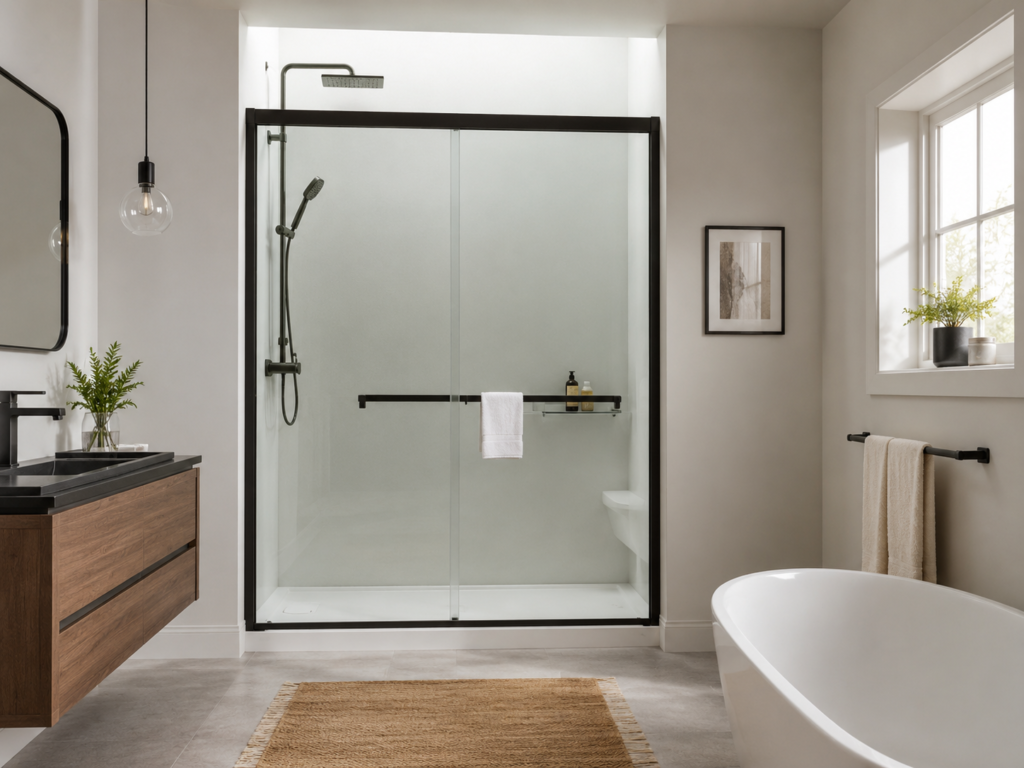
Three kinds of bathroom renovation, and why the difference matters
The refresh. Nothing moves. You’re swapping the vanity, faucet, toilet, flooring, mirror, and lighting, then painting. No walls open. Because no plumbing gets relocated, this is the fastest and least disruptive version, and it’s often the right call for a guest bath or powder room that’s simply dated rather than failing.
The full rebuild, same footprint. The room comes down to studs, but the toilet, sink, and shower stay where they’ve always been. New shower pan or tub, new waterproofing behind the tile, updated shutoffs and supply lines, new subfloor where it’s needed. Most homeowners who say “we’re remodeling the bathroom” are describing this.
The layout change. Moving the toilet. Turning a cramped tub alcove into a curbless walk-in shower. Stealing eighteen inches from a hallway closet to fit a double vanity. The moment drain lines move, you’ve added venting work, more inspections, and real time to the schedule.
Each tier roughly doubles the one before it. Knowing where you sit is more useful than any cost calculator you’ll find online.
What Illinois homeowners are actually paying in 2026
Illinois runs above the national average, and there are two straightforward reasons. Labor costs more here, especially across the Chicago metro. And our housing stock is old, which means what’s behind the drywall is frequently a surprise.
Current 2026 figures put a typical statewide bathroom remodel somewhere around $12,000 to $35,000. Chicago proper sits at the top of that band, with plenty of projects running past $40,000 once older-building conditions come into play. Suburban work generally lands more moderately, and downstate markets like Rockford and Peoria come in lower still, mostly on labor rates.
A working framework for the Northwest suburbs:
| Project type | Realistic range |
| Powder room or half bath | $4,000 – $9,000 |
| Cosmetic full-bath update | $8,000 – $15,000 |
| Full rebuild, layout unchanged | $15,000 – $32,000 |
| Layout change or primary bath | $30,000 – $55,000+ |
Two decisions move these numbers more than tile selection ever will. The first is your home’s age. A 1990s build in Streamwood with accessible PEX and a healthy subfloor is a different job than a 1960s split-level in Hoffman Estates with galvanized supply lines and no waterproofing membrane anywhere. The second is whether the drain moves. Relocating a toilet is the single most expensive thing homeowners casually agree to during the design phase, usually without being told what it costs.
The local details that catch people off guard
Chicago and the suburbs are not the same jurisdiction. The city runs its own building code, separate from the state’s IRC-based rules, with its own permitting rhythm and licensed-trade requirements. Suburban villages each have their own amendments and inspection schedules on top of that. A contractor fluent in one municipality isn’t automatically fluent in the next one over, which is worth asking about directly.
Permits are cheap. Inspections are the point. A bathroom permit usually runs a few hundred dollars. What you’re buying is a plumbing and electrical rough-in inspection before drywall closes the walls, which is the only moment anyone can verify the work behind your tile. If a contractor suggests skipping it, they’re proposing that you absorb the liability and disclose unpermitted work when you sell.
Older homes hide things, and that’s normal. Undersized venting, aluminum branch wiring, a subfloor that’s been slowly wicking moisture, tile set directly on drywall with no membrane. None of this is visible during an estimate walkthrough. A contractor who has never once mentioned the possibility of hidden conditions is either brand new or managing your expectations badly on purpose.
Winter is a fine time to do this. Bathroom work is interior work. Scheduling in January is often easier than fighting the spring-through-fall backlog.
How to read three quotes that don’t match
Everyone says get three bids. Almost nobody explains what to do when they come back at $17,000, $24,000, and $33,000.
Start by lining up scope rather than totals. Does each bid include demolition and disposal? Is there a proper waterproofing membrane in the shower, or just cement board? Who supplies the fixtures, and is the tile allowance realistic or set artificially low so the number looks friendly? Nine times out of ten, the gap explains itself once the scopes sit side by side.
Then check licensing and insurance yourself. Plumbing is licensed at the state level through the Illinois Department of Public Health. General contractor registration is handled locally, village by village. Ask for the certificate of insurance to come from the insurer directly, not as a photocopy pulled from a truck folder.
Ask who’s actually on site. Are the tile setters employees or subcontractors? Who’s your point of contact when a decision is needed at eight in the morning? A bathroom is a small room with six trades moving through it, and coordination is most of the job. This is the part of the bathroom remodeling process worth understanding before you sign anything.
Finally, read the payment schedule. Milestone-based progress payments are standard. A large deposit before any materials are ordered is a reason to slow down. Illinois’s Home Repair and Remodeling Act requires a written contract for work over $1,000 and a consumer-rights pamphlet handed to you. Treat that as the floor, not the finish line.
What the schedule really looks like
For a full rebuild with the layout unchanged:
- Two to six weeks of design, selections, and ordering before anyone shows up
- One or two days of demolition
- Three to five days of rough plumbing and electrical, plus inspection
- About a week of waterproofing, tile, and cure time
- A final week for vanity, fixtures, trim, paint, and punch list
Call it three to five weeks of active work. The delays that actually hurt are almost always material lead times. A special-order vanity or a discontinued tile can park a job for a month. Everything should be on hand before demolition starts, and any contractor who tells you otherwise is planning to have your bathroom sitting open while they wait on a shipment.
The honest case for doing it
Bathrooms return well at resale, and buyers in older Chicagoland housing respond strongly to one that’s already been done, precisely because they know what’s involved. But resale is the secondary argument. You’re in that room twice a day, every day, for as long as you own the house.
The projects that hold up are the unglamorous ones done correctly: real waterproofing, ventilation sized and ducted to the exterior, quality valves inside the wall, and finishes that won’t read as dated in six years. The trendy tile is the cheapest thing to change later. What sits behind it isn’t.
Before you call anyone
Write down three things. Your must-haves. Your nice-to-haves. And the number that would genuinely make you uncomfortable to exceed. Bring all three to the first conversation, including the last one.
A good remodeler will tell you which tier your goals actually require, whether your budget matches it, and what they’d cut first if it doesn’t. At Kipchakoff Remodeling Group, that conversation happens before a single tile gets picked, because it’s the one that determines how the rest of the project goes.
If you’re planning bathroom remodeling in Hoffman Estates or a nearby Northwest suburb, we’re happy to walk the space, talk through scope honestly, and give you a realistic picture of cost and schedule before you commit to anything.